Team Building With Fitness Challenges: How Walking and Movement Unite Remote Teams

Here's a stat that should grab every People Ops leader's attention: 67% of remote workers report feeling less connected to their colleagues. And global employee engagement dropped from 23% to 21% in 2024 alone. If you manage a distributed or hybrid team, you already feel this. The hallway conversations, the spontaneous lunches, the after-work runs - they don't happen naturally when your team is scattered across cities or time zones. But team building with fitness challenges is changing that, and the data backs it up.
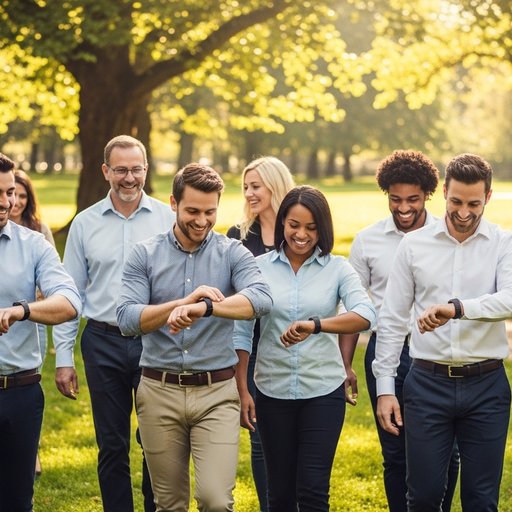
Remote teams that engage in regular team-building activities show 73% higher engagement rates and 50% better retention. Fitness challenges - step competitions, virtual races, cycling events, movement streaks - give distributed teams something they desperately need: a shared experience that isn't another Zoom call.
Why Fitness Challenges Work Better Than Traditional Team Building
Let's be honest. Most virtual team-building activities feel forced. Trivia nights, icebreaker games, virtual escape rooms - they can be fun once, but they rarely create lasting bonds. Fitness challenges are different because they tap into something deeper: shared struggle and mutual encouragement over time.
Research on group cohesion identifies two distinct types that matter for teams. Task cohesion is how connected people feel when working toward shared objectives. Social cohesion is the personal closeness and mutual support between teammates. Fitness challenges build both simultaneously. When your marketing team is collectively trying to walk 500,000 steps in a month, they're aligned on a goal (task cohesion) while cheering each other on in Slack (social cohesion).
Studies show that team-building interventions are most effective when they last longer than two weeks and target individual attraction to group tasks. That's exactly what a well-designed fitness challenge does - it runs for 3-4 weeks, gives everyone a personal stake, and wraps individual effort into team success.
And unlike a one-hour virtual happy hour, fitness challenges create daily touchpoints. Every morning someone shares their walk photo. Every afternoon someone posts their step count. These micro-interactions compound into genuine connection.
The Health and Business Case for Moving Together
The benefits aren't just about warm feelings. There's a hard business case here too.
Workers who maintain at least 75 minutes of vigorous physical activity per week miss an average of 4.1 fewer workdays per year than their inactive peers. For a company of 500 employees, that translates to over 2,000 recovered workdays annually. Participants in team workout challenges also report better concentration and fewer stress-related absences.
This matters especially for newly remote employees, who are 30% more likely to report declining mental health compared to those who've been remote for longer. A fitness challenge can ease their transition by giving them an immediate community and a low-pressure way to connect with colleagues they've never met in person.
Organizations that implement shared physical activity programs consistently report increased productivity, reduced absenteeism, improved morale, enhanced communication, and greater resilience under pressure. These aren't soft outcomes - they directly affect your bottom line. The Harvard Business Review has cited wellness program returns of up to $3.27 saved for every $1 spent, with some programs reaching a 6:1 ROI when factoring in reduced healthcare costs and improved retention.
Five Fitness Challenge Formats That Actually Build Teams
Not all challenges are created equal. The best formats for team building share a few traits: they're inclusive regardless of fitness level, they encourage daily interaction, and they make individual contributions visible to the group. Here are five formats that work particularly well for remote and hybrid teams.
1. Team Step Challenges
The classic format, and still the most effective for broad participation. Divide your company into teams of 5-8 people, set a collective step goal, and let the leaderboard do its magic. Steps are the great equalizer - everyone walks, regardless of age or fitness level. A 30-day challenge with weekly milestones keeps energy high without burning people out.
2. The WHO 150-Minute Challenge
Based on the World Health Organization's recommendation of 150 minutes of moderate physical activity per week, this format focuses on sustainable habits rather than peak performance. Each team member logs their active minutes - walking, cycling, swimming, yoga, whatever they enjoy. Teams track collective minutes and celebrate when everyone hits the weekly target. It's inclusive and science-backed.
3. Virtual Race Adventures
Map your team's collective distance onto a real-world route - say, walking from New York to Los Angeles, or tracing the Camino de Santiago. As the team accumulates miles, they "travel" along the route together. This format adds a storytelling element that keeps people engaged far longer than a simple step count. Virtual maps turn abstract numbers into a shared journey.
4. Mind and Movement Challenges
Pair physical activity with mindfulness for a holistic approach. The daily prescription: 20 minutes of exercise, 10 minutes of stretching or breathing exercises, and 5 minutes of gratitude reflection. Teams share their reflections in a dedicated channel. This format works especially well for high-stress teams or during busy seasons when burnout risk is elevated.
5. Department vs. Department Competitions
Inter-office challenges that compare average active minutes across departments boost regular activity and team spirit. Engineering vs. Sales. Marketing vs. Product. The friendly rivalry creates natural conversation starters and breaks down silos that remote work tends to reinforce. Use average minutes per person (not totals) so smaller teams aren't disadvantaged.
How to Launch a Fitness Challenge That People Actually Join
A great challenge format means nothing if participation is low. Here's what the research and practitioner experience tell us about driving sign-ups and sustained engagement.
Get leadership involved first
When the VP of Engineering posts her morning walk stats, it signals that taking time for health is genuinely supported - not just tolerated. Leadership participation is the single strongest predictor of program adoption.
Make it ridiculously easy to join
If signing up requires downloading three apps, creating accounts, and syncing devices manually, you'll lose half your audience before they start. Choose a platform that syncs automatically with popular wearables like Garmin, Fitbit, Apple Watch, and Polar. The fewer steps between "I'm interested" and "I'm participating," the better.
Build teams intentionally
Don't just let people pick their own groups. Mix departments, seniority levels, and locations. The whole point is building connections that wouldn't form naturally. A junior developer in Austin paired with a senior designer in Toronto is exactly the kind of cross-pollination remote companies need.
Create daily rituals
Schedule 5-minute guided movement breaks during team meetings. Rotate who leads them. Create a dedicated Slack or Teams channel for challenge updates, photos, and encouragement. These micro-rituals matter more than the challenge itself - they build the connective tissue of your team culture.
Celebrate progress, not just winners
Recognize milestones along the way: most improved, longest streak, best team spirit, funniest walking photo. If only the top steppers get acknowledged, you'll discourage the very people who need the challenge most. Make it clear that showing up consistently matters more than raw numbers.
Making It Work for Hybrid Teams
Hybrid teams face a unique challenge: the in-office group naturally bonds through proximity, while remote members can feel like second-class citizens. Fitness challenges level this playing field beautifully.
A step challenge doesn't care whether you're walking around your neighborhood or pacing the office hallway. Virtual maps don't distinguish between a treadmill mile and a trail mile. Everyone contributes equally, regardless of where they work.
Some companies take it further by organizing "walking meetings" for small groups - two or three people hop on a phone call and walk simultaneously from their respective locations. It's a simple shift that combines productivity with movement, and participants consistently report more creative, relaxed conversations compared to desk-bound video calls. Research on walking meetings shows measurable improvements in creative thinking and problem-solving.
For hybrid teams specifically, consider running challenges that span time zones gracefully. Asynchronous formats work best - daily or weekly goals that people can hit on their own schedule, with a shared leaderboard that updates in real time. This way, your colleague in London and your teammate in Vancouver both feel equally involved.
How DistantRace Makes Team Fitness Challenges Simple
DistantRace was built for exactly this use case. It supports step challenges, virtual races, and activity-based competitions with automatic syncing from Garmin, Fitbit, Apple Watch, Polar, and other popular wearables. Teams get real-time leaderboards, virtual maps that visualize collective progress, and an admin dashboard that makes setup take minutes instead of hours.
Whether you're running a 2-week department challenge or a company-wide virtual marathon, DistantRace handles the tracking, the engagement, and the fun - so you can focus on what matters: bringing your team closer together. Try it for your next team challenge.
Start Small, Start Now
You don't need a massive budget or a six-month planning cycle. A simple 2-week step challenge with teams of five is enough to see real results. The research is clear: shared physical activity builds both task cohesion and social cohesion. It reduces absenteeism, improves mental health, and creates the kind of daily micro-connections that remote teams desperately need.
Team building with fitness challenges isn't a trend - it's a practical, evidence-based approach to solving one of remote work's hardest problems. Pick a format, set a start date, and get your team moving together. The bonds you build one step at a time will outlast any virtual happy hour.
À propos de nous
Bonjour ! Nous sommes DistantRace. Poussés par notre passion pour le sport, nous nous efforçons de fournir un soutien exceptionnel dans l'organisation d'événements sportifs inégalés. Nous croyons que chacun mérite d'accéder aux meilleures expériences sportives.



Étiquettes
TikTok
@distantrace
S'abonner
Recevez les dernières actualités, réductions et offres.