Wellness Program for Frontline Workers: A 2026 HR Playbook
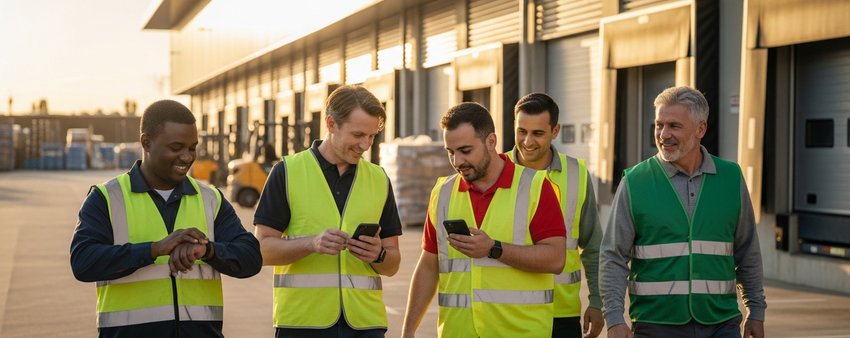
Here's a number that should stop every HR leader in their tracks: only 43% of deskless workers feel seen and appreciated at work, compared with 61% of their desk-based colleagues. Now layer on the fact that roughly three-quarters of frontline workers report some form of burnout, and you start to understand why building a real wellness program for frontline workers is no longer a nice-to-have. It's a retention strategy. The people stocking shelves, driving routes, staffing hospital floors, and running production lines are the ones holding your operation together, yet they're routinely the last to benefit from the wellness perks office staff take for granted. This guide walks through why the gap exists and how to close it.
Why frontline wellness keeps falling through the cracks
The first thing to understand is that most corporate wellness programs were built for people who sit at a desk. They assume a company email address, a quiet moment to log into a portal, and a predictable nine-to-five rhythm. Frontline workers have none of those things.
And the data shows it. Across general workplace wellness programs, average participation sits at just 20% to 30%. Dig deeper and it gets worse: 50% of employers report participation of 10% or less for their wellness initiatives, and one in six disease-management programs see literally zero participation. Preventive lifestyle programs draw only 7% to 21% of eligible employees. Fitness programs, the most popular category, still top out around 21%.
So the problem isn't that companies aren't offering wellness. It's that the offer doesn't fit how frontline people actually work. A wellness portal that requires email sign-in is invisible to someone who clocks in on a shop floor. A lunchtime yoga session means nothing to a nurse on a 12-hour shift or a warehouse picker mid-route. When 78% of deskless workers say company technology influences whether they'll even take a job, the message is clear: the tools have to meet workers where they are, on their phones, on their schedules.
The cost of getting it wrong
Ignoring frontline wellbeing is expensive in ways that show up directly on the balance sheet. Burnout affects roughly 40% of frontline employees and 31% of their managers, and the downstream effect is turnover. Workday reports that replacing a frontline worker can cost anywhere from 30% to 200% of their annual salary once you account for recruiting, onboarding, and lost productivity.
Healthcare offers the sharpest picture because it has the strongest recent data. The CDC found that 46% of health workers felt burned out often or very often in 2022, up from 32% in 2018. In the same period, the share intending to look for a new job jumped to 44%. One 2026 summary pegged healthcare-worker burnout at a $4.6 billion annual cost in the U.S. from turnover and reduced clinical hours alone. A 2025 Harris poll found more than half of U.S. healthcare workers planning to switch jobs in 2026.
But this isn't a healthcare-only story. Manufacturing and retail face the same pressures: physical labor, long shifts, fatigue, and rising rates of harassment and workplace stress. A 2026 mental-health roundup found that 66% of U.S. employees felt burned out in some form over the past year, and 54% said job insecurity significantly raised their stress. Frontline roles were among the groups most worried about losing work to automation.
What actually works for deskless teams
The good news is that the fix is well understood. Engagement climbs when wellness is mobile-first, shift-friendly, and tied to recognition. Employers with a strong wellbeing focus see the payoff: 69% of them report strong employee engagement, versus just 28% of less effective employers. That's not a rounding error. That's a different company.
A few principles separate programs that work from ones that gather dust:
- Go mobile-first, always. If a worker can't access it from a personal phone in under 30 seconds, it doesn't exist. Skip the email-dependent portals.
- Respect the shift. Activities should fit around irregular hours, not assume a standard workday. Anything that works on a worker's own time wins.
- Build in recognition. Belonging drives performance. One 2026 report found 83% of workers perform better when they feel they belong, and 62% would consider leaving if they didn't.
- Make it social, not solo. Team-based formats turn a private health goal into a shared, visible team effort that managers can rally around.
The throughline is simple: meet people on their phones, on their schedule, and give them a reason to feel part of something.
Why step challenges fit frontline work so well
Of all the wellness formats out there, step challenges might be the single best fit for deskless teams, and not by accident. Frontline workers are already moving. A retail associate, a warehouse picker, or a nurse can rack up serious step counts just doing their jobs. A step challenge rewards activity they're already doing rather than asking them to carve out gym time they don't have.
It's also inherently inclusive. There's no special equipment, no skill barrier, and no fitness-level gatekeeping. Someone can participate from a delivery truck, a hospital ward, or a factory floor with nothing but the phone in their pocket. And because steps are easy to compare, the format naturally supports leaderboards, team competitions, and friendly rivalry between locations or shifts, which is exactly the kind of recognition that drives engagement.
A practical rollout plan
You don't need a six-month committee to launch something good. Here's a sequence that works for distributed, deskless teams:
- Pick one simple goal. Start with a 4-week team step challenge rather than a sprawling multi-pillar program. One clear thing people understand beats five things they ignore.
- Recruit shift-level champions. A respected coworker on each shift or at each site will do more for sign-ups than any corporate email. Frontline trust is local.
- Communicate where they already are. Break-room posters with a QR code, text messages, and announcements at shift handovers beat the company intranet every time.
- Group people into teams. Pit stores against stores, shifts against shifts, or regions against regions. The competition is the engagement engine.
- Recognize publicly and often. Weekly shout-outs for top teams, small prizes, and a visible leaderboard keep momentum from fading after week one.
Keep the first program short and winnable. A four-week challenge that 60% of a site joins is a far bigger success than a year-long platform that 8% touch. Win small, then build on the trust you've earned.
Measuring whether it's working
Track a few things that matter and ignore vanity metrics. Participation rate by site or shift tells you whether the format is actually reaching people. Watch week-over-week active participation to see if engagement holds past the launch buzz. Over a longer horizon, pair the program with the numbers that finance cares about: turnover and absenteeism by location.
Because the bar for frontline participation is so low industry-wide, even modest results stand out. If general programs average 20% to 30% participation and you hit 50% on a shop floor with a mobile step challenge, you've built something genuinely better than most of your peers. That's a story worth telling leadership when budget season comes around.
Where DistantRace fits in
This is exactly the kind of program DistantRace was built to run. It's a virtual challenge platform designed around step challenges, virtual races, and team competitions, with the mobile-first, sync-anywhere approach frontline wellness demands. Workers connect the device they already use, whether that's a phone, Garmin, Fitbit, Apple Watch, or Polar, and their activity counts automatically, no manual logging or desktop portal required.
Organizers get team leaderboards, virtual map journeys, and challenge formats that work across shifts and locations, so a warehouse in one state can compete with a store in another. For HR teams trying to reach a deskless workforce without a heavy IT lift, it turns a hard logistics problem into a few clicks. You can explore the options at distantrace.com.
The bottom line
A wellness program for frontline workers fails when it's a desk worker's program in disguise, and it succeeds when it's built around how deskless people actually live and work: on their feet, on their phones, and on their own schedule. The data is consistent across manufacturing, retail, and healthcare. Frontline burnout and turnover are real and costly, but engagement responds fast when wellness is mobile, social, and genuinely accessible. Start with one short, simple step challenge, recruit local champions, and measure participation by site. Get that right, and you'll reach the workforce most wellness programs forget. Pick one site, launch a four-week challenge, and build from there.
من نحن
مرحبًا! نحن DistantRace. مدفوعين بشغفنا بالرياضة، نحرص على تقديم دعم استثنائي في تنظيم فعاليات رياضية متميزة. نؤمن بأن الجميع يستحق الوصول إلى أفضل التجارب الرياضية. تواصلوا معنا وسنساعدكم على تحقيق ذلك!

أحدث المقالات
العلامات
TikTok
@distantrace
اشترك
احصل على أحدث الأخبار، والخصومات، والعروض.