Walking Meeting Benefits: The Science HR Leaders Need to Know in 2026
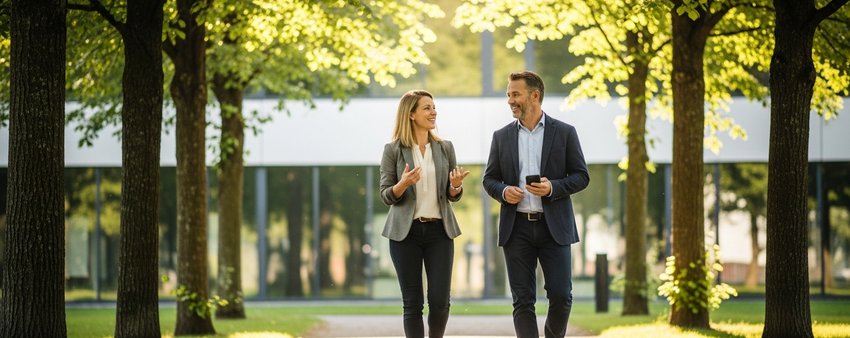
Picture this scenario: two of your senior product managers spend 45 minutes locked in a windowless conference room debating a roadmap. They leave irritated, foggy, and no closer to a decision. Now picture the same two people walking a quiet path in the park near your office for the same 45 minutes. Same topic, same goal, but a very different outcome. That's not just a feel-good story. A growing body of research, including a foundational Stanford University study, shows that walking meeting benefits include a creativity boost of roughly 60% compared to sitting. For HR leaders, wellness coordinators, and managers in the US and Canada, this is one of the cheapest, lowest-friction wellness wins available in 2026.
What the research actually says about walking meetings
Walking meetings aren't a wellness trend dreamed up in a LinkedIn post. The science behind them is unusually clean for a workplace practice. The strongest evidence sits in four areas: creativity, mood, candor, and the focus quality of the work that happens afterward.
The Stanford research that kicked off the modern interest in walking meetings tested participants on standard creativity tasks while sitting versus walking. People generated more novel, useful ideas while walking, and the effect persisted briefly even after they sat back down. A more recent 2024 review in Discover Psychology reached a similar conclusion: low-intensity walking, especially in natural or green settings, reliably improves originality and divergent thinking.
Why does this matter for HR? Because most of the work that drives a modern company is exactly the kind of thinking walking helps with. Brainstorming, problem-solving, 1:1 coaching conversations, and early-stage strategy all benefit from cognitive flexibility. Sitting in a chair under fluorescent light, by contrast, tends to encourage people to converge too quickly on the first decent answer.
Beyond creativity, walking meetings show measurable benefits for mood, stress, and burnout symptoms. A pilot workplace study cited in recent wellbeing coverage found that replacing just one seated meeting per week with a 30-minute walking meeting improved employees' mood scores and produced modest gains in self-reported productivity. The effect was strongest when the walk took place outdoors.
The creativity case: why ideas flow better at 3 mph
If your company runs on knowledge work, creativity is your raw material. And creativity has a problem: it doesn't reliably show up on demand inside a 30-minute Zoom block. Walking helps in three specific ways that matter for the workday.
First, walking increases cognitive flexibility. The Stanford team measured this with the Guilford Alternative Uses Test, which asks people to generate creative uses for everyday objects. Walkers generated roughly twice as many original ideas as sitters. The effect didn't depend on the scenery either. People walking on a treadmill facing a blank wall showed gains too, although outdoor walks added an additional bump.
Second, walking quiets the inner editor. When people walk side by side, the lower-stakes, conversational rhythm encourages them to share half-formed thoughts rather than waiting until an idea is fully polished. That's exactly the kind of thinking that produces breakthroughs. Brainstorming dies the moment people start self-censoring.
Third, walking reduces mental fatigue after stretches of sedentary work. Cognitive performance declines as the day wears on, particularly after lunch and after long sitting blocks. A 30-minute walk effectively resets attention and energy. So a 2 p.m. walking 1:1 isn't just nicer than another conference room, it's likely to produce sharper thinking from both people.
What this looks like in practice
You don't need to overthink this. A walking meeting is most useful for:
- 1:1 coaching and check-ins between a manager and direct report
- Early-stage brainstorming where the goal is volume of ideas, not narrowing
- Career conversations and feedback that benefit from a less formal vibe
- Skip-level meetings where hierarchy can suppress honesty in a conference room
- Pair problem-solving on a thorny but non-confidential topic
Mood, stress, and burnout: the wellness payoff
The cognitive case for walking meetings is strong, but the wellness case is what makes them a fit for the HR portfolio. Workplace stress is at historically high levels. According to recent Gallup and APA data, more than half of US employees report feeling stressed during much of the workday, and burnout cases continue to rise in knowledge-work sectors. Sitting in back-to-back video meetings has been part of the pattern.
Walking meetings target several burnout drivers at once. They add light physical activity into the day without requiring a separate "workout" commitment. They get people outside, which lowers cortisol and improves mood through sunlight and nature exposure. And they break the monotony of consecutive screen-based meetings, reducing what researchers now call video meeting fatigue.
The pilot data is encouraging. Companies that have introduced walking meeting norms report higher self-rated energy levels, lower mid-afternoon fatigue, and improved meeting satisfaction scores. These aren't dramatic transformations. But for a wellness intervention that costs almost nothing, the return is hard to beat.
Walking meetings encourage honesty and openness
Here's a benefit that doesn't show up in step counts but matters more than most leaders realize. Walking side by side changes the social geometry of a conversation. You're not facing each other across a table. There's no eye-contact pressure. Pauses don't feel awkward because you're both doing something else with your bodies.
The result is more candor. Managers running 1:1s in walking format consistently report that direct reports share things they wouldn't bring up in a conference room. Underperforming team members, conflict with peers, doubts about strategy, ideas that feel half-baked. All of these surface more easily on a sidewalk than in a glass-walled meeting room.
This matters for managers, but it also matters for HR. If you want a workplace culture where problems surface early instead of festering, you need the kinds of conversations where people feel safe being honest. Walking meetings are a structural intervention for that. They don't require training, frameworks, or new software. They just require permission and a route.
How to formalize walking meetings without making them weird
The biggest obstacle to walking meetings isn't the science. It's the culture. People worry about looking unprofessional, being unprepared, or seeming odd for suggesting one. Your job as an HR or People Ops leader is to remove that friction.
1. Leadership has to model it first
If your CHRO and VPs are still booking every meeting in conference rooms, walking meetings will stay marginal. Get senior leaders to do their 1:1s walking when possible, and to mention it casually in all-hands talks. A line like "I'll be walking during our 1:1, feel free to join me" normalizes the practice faster than any policy.
2. Build it into the meeting culture, not the wellness program
Tag walking meetings as a smarter way to run certain meetings, not as a wellness mandate. People resent being told to walk for their health. They embrace a tool that helps them think better and have less boring days. Frame it that way.
3. Pre-scout 2-3 office walking routes
Map a short loop (10 minutes), a medium loop (20-30 minutes), and a longer one (45+ minutes). Share the routes in your employee handbook or office wiki. This removes the "where would we even walk?" objection, which is the single biggest reason walking meetings never get scheduled.
4. Set norms on documentation
One of the legitimate concerns is that walking meetings produce no notes. Solve this with a simple norm: one participant uses their phone's voice memo or a notes app to capture action items, and follows up with a short recap email. Worth knowing: only about 37% of American meetings use a written agenda at all, so the bar is lower than people think.
5. Address weather and accessibility upfront
Have a backup plan for rain, snow, or extreme heat. Indoor walking routes work in larger office buildings. For employees with mobility limitations, offer standing meetings or seated outdoor meetings as alternatives. Inclusion has to be designed in, not added later.
Walking meetings as part of a bigger movement strategy
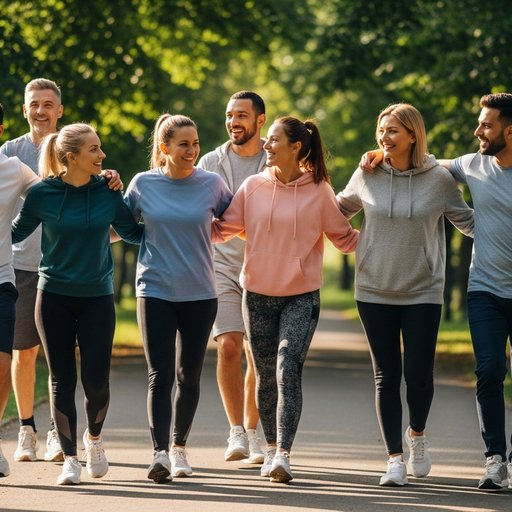
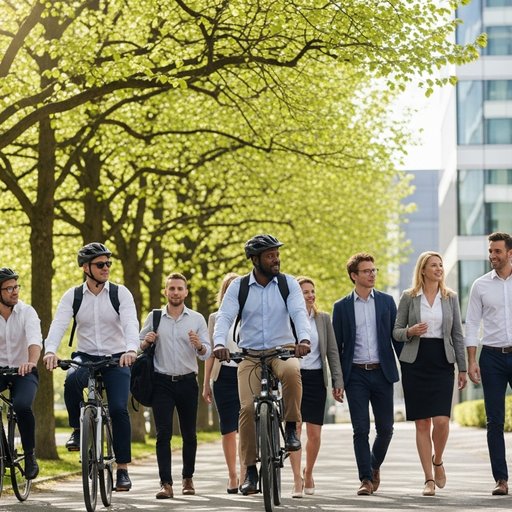
Walking meetings are most powerful when they're part of a broader workplace movement culture, not a standalone tactic. A few walking meetings a week won't undo eight hours of sitting on their own. But combined with sit-stand desks, walking pads, and a structured step challenge, they shift the baseline.
This is where platforms like DistantRace fit in. DistantRace lets HR and wellness teams run virtual step challenges, walking competitions, and team-based fitness events that sync with Garmin, Fitbit, Apple Watch, and Polar devices. Steps logged during walking meetings count toward team leaderboards, which turns ordinary 1:1s into a small contribution to a bigger company goal. The result is that walking meetings stop feeling like a one-off and start feeling like part of the culture. For distributed and hybrid teams in particular, this kind of shared challenge is one of the cleaner ways to keep wellness visible without forcing everyone into the same room or gym.
Common objections and how to handle them
Some pushback is predictable. Here's how to handle the most common objections.
"It feels unprofessional." This usually means the team hasn't seen leaders do it. Once a VP runs a walking 1:1 with a director, the perceived professionalism shifts fast.
"We need to share documents." Then it's not a walking meeting. Use this format for conversations, not for screen-driven reviews. Walking meetings replace some meetings, not all of them.
"I have back-to-back calls." The opportunity is in the 1:1s, the brainstorms, and the catch-up calls. Even one walking meeting per day breaks the seated streak.
"It's too cold/hot/rainy." Indoor routes solve most of this. Mall walking and large-lobby loops aren't glamorous but they work.
"My team is remote." Walking phone calls are still walking meetings. The headphones-and-phone version captures most of the mood and creativity benefits, just without the side-by-side dynamic.
Measuring whether walking meetings are working
You don't need an elaborate measurement program, but a few signals are worth tracking. Pulse-survey items on meeting satisfaction, energy levels, and 1:1 quality will move first. If you run a step challenge alongside, you can watch whether daily step averages climb for participants who adopt walking meetings versus those who don't. Most companies that have tried this report a modest but real bump in average steps, plus better-rated 1:1s within a quarter or two.
If you want a single number to watch, ask one question in your next engagement survey: "How energized do you feel at the end of your typical workday?" If walking meetings take hold, that number will climb.
Final thoughts
Walking meeting benefits are unusually well-supported by research, unusually cheap to implement, and unusually well-suited to the kind of work most companies do today. They boost creativity by roughly 60% in lab studies. They improve mood and reduce stress. They make 1:1s more honest. And they slot neatly into a broader wellness culture that includes step challenges, virtual races, and movement-friendly office design.
If you're an HR leader, wellness coordinator, or manager looking for a single change that costs nothing, irritates no one, and meaningfully improves how your people think and feel, walking meetings are the answer. Pick one recurring 1:1 this week. Suggest walking it. Then watch what happens to the conversation.
Über uns
Willkommen! Wir sind DistantRace. Angetrieben von unserer Leidenschaft für Sport bieten wir außergewöhnliche Unterstützung bei der Organisation einzigartiger Sportveranstaltungen. Wir glauben, dass jeder Zugang zu erstklassigen sportlichen Erlebnissen verdienen sollte. Schreibe uns und wir helfen dir dabei, deine eigenen Sportevents zu gestalten!


TikTok
@distantrace
Abonnieren
Erhalten Sie die neuesten Nachrichten, Rabatte und Angebote.