Here's a number that should give every HR team pause: most workplace wellness events draw a fraction of the people they could. Health fair planning guides recommend estimating just 25% to 50% of your on-site population as expected attendance, and plenty of events land at the low end of that range. A well-run corporate wellness day can do far better than that, but only when the planning starts months ahead and the agenda is built around what employees actually want. Get it right and you create a single day that resets stress levels, sparks new habits, and reminds your team that the company is paying attention to their wellbeing. Get it wrong and you've booked a yoga instructor nobody came to see.
This guide walks through wellness day ideas that drive real turnout, plus the timeline and metrics that separate a packed event from an empty conference room.
What a corporate wellness day is really for
A corporate wellness day is a focused block of time, usually a single day, dedicated to employee health and wellbeing. It can run on-site, fully remote, or hybrid. The point isn't to fix everyone's health in eight hours. It's to lower the barrier to good habits, surface resources people didn't know they had, and signal that taking care of yourself is part of the culture here.
That signal matters more than it sounds. The business case for workplace wellbeing is well documented. Harvard research famously found that well-designed wellness programs can return up to $6 for every $1 spent, with an average return around $3.27 per dollar through lower medical costs and reduced absenteeism. On the flip side, physical inactivity costs U.S. employers an estimated $54 billion a year in lost productivity. A wellness day is one of the cheapest, highest-visibility ways to start chipping away at those numbers.
But a day is just a day. The teams that get the most out of it treat the event as a launchpad for something ongoing, like a step challenge or a recurring wellness hour, rather than a one-and-done.
Wellness day ideas that actually pull a crowd
The biggest mistake HR teams make is building the whole day around a single lecture-style session. Research on wellness event engagement is clear: the most effective format mixes one active element, one educational element, and one social element rather than betting everything on one talk. Here are the ideas worth building around.
Move the body
Low-pressure movement is the easiest win. Guided sessions like yoga, Pilates, stretching, or a simple walk-and-talk break work because they adapt to every fitness level and nobody feels singled out. A 20-minute group stretch you can stream to remote staff costs almost nothing and gets people out of their chairs.
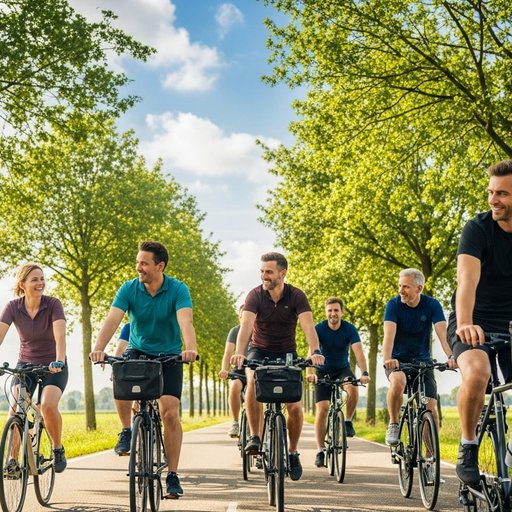
For teams that like a little friendly competition, office Olympics deliver energy fast. Think three-legged races, hula-hooping, jump rope, a bracket-style ping-pong tournament, or a virtual activity leaderboard that onsite and remote people can both climb. The competition is the point, not athletic skill.
Feed the mind
Educational sessions land best when they're practical and short. A lunch-and-learn with a registered dietitian, a healthy cooking demo, a meal-prep workshop, or a mindful-eating session gives people something they can use that night. Keep these to 30 minutes with real Q&A time.
Mindfulness and reset blocks belong here too. A short meditation workshop, a breathwork session, or a "choose-your-own-reset" hour reduces stress without piling on planning work for your team. These are quietly some of the highest-rated activities because they give people genuine permission to pause.
Build connection
The social layer is what turns a wellness day into something people talk about afterward. Volunteer events, kindness challenges, peer-recognition prompts, and small-group discussions all support engagement that goes beyond individual health. A group volunteer shift or a team charity walk doubles as team building and rarely feels like a "wellness activity," which is exactly why people show up.
Make resources easy to find
A wellness fair or resource hub pulls everything into one place: biometric screenings, telehealth info, mental health and EAP resources, ergonomic guidance, and vendor booths. When people can wander through and grab what's relevant to them, you reach folks who'd never sign up for a formal session.
A sample one-day agenda
You don't need to cram in everything. A balanced day that serves both onsite and remote employees might look like this:
- Morning: a guided stretch or mindfulness session to set the tone
- Midday: a healthy lunch-and-learn or cooking demo
- Afternoon: a team step challenge kickoff, walk-and-talk meetings, or a volunteer activity
- All day: a wellness resource hub, a hydration station, and peer-recognition prompts running in the background
That's one active element, one educational element, and one social element, exactly the mix the research points to. Streaming the morning and midday sessions keeps remote and hybrid staff fully included instead of watching from the sidelines.
The planning timeline that prevents an empty room
Strong turnout is mostly a function of how early you start and how often you communicate. Event planning guides lay out a sequence that works, and the lead times are longer than most people expect.
- 5 to 6 months out: secure leadership support and name a planning champion. Without a visible sponsor, the day reads as optional.
- 4 months out: form a small committee, define your audience, and estimate attendance so you can plan space, staffing, and vendors realistically.
- 3 months out: lock the date, time, venue or platform, floor plan, and how you'll measure success.
- 4-plus weeks out: start promoting, and keep at it. Use email, the intranet, posters, manager messaging, and calendar holds, and vary the channel each week so the reminders don't blur together.
- After the event: review participation, feedback, and follow-up actions so the next one is even better.
One detail does a lot of quiet work here: ask employees what they want before you plan anything. A quick survey, a poll, or a couple of focus groups will tell you which topics and activities people will actually attend. Events aligned to expressed needs consistently see higher uptake than events HR designed in a vacuum.
How to measure whether it worked
Headcount alone is a weak metric. The participation data that actually tells you something tracks the full journey from sign-up to behavior change. A few measures worth watching:
- Expected attendance rate: estimate 25% to 50% of your on-site population so you can staff and stock the day correctly.
- Registration versus attendance: the gap between who signed up and who came reveals how well your reminders worked.
- Satisfaction rating: a short post-event survey tells you whether the day met real needs or just filled a calendar slot.
- Behavior-change intention: ask whether attendees learned something and plan to change a habit. That's the leading indicator of lasting impact.
- Participation by department or location: shows whether you reached the whole workforce or just the teams nearest the snack table.
Track these every year and your wellness day gets measurably better each time, instead of resetting from scratch.
Turn one day into lasting momentum
The events that change behavior don't end at 5 p.m. They hand people an on-ramp to something ongoing. A step challenge is the natural next step, because it's inclusive, easy to join, and works just as well for the warehouse crew as the remote design team.
This is where a platform like DistantRace fits in. You can launch a team step challenge or a virtual race right off the back of your wellness day, with live leaderboards, virtual route maps, and automatic syncing from Garmin, Fitbit, Apple Watch, and Polar so nobody's manually logging steps. The gamification keeps people engaged long after the event, and the team formats turn individual movement into something colleagues do together, whether they're in the same office or five time zones apart.
The takeaway
A great corporate wellness day isn't about how many activities you cram in. It's about starting early, asking employees what they actually want, mixing movement, learning, and connection, and measuring more than just who showed up. Use these corporate wellness day ideas as a menu, not a checklist, and pick the handful that fit your culture. Then give people somewhere to take the momentum next, like a step challenge they can join on the spot. Plan the day with intention, and you'll get a room that's full, an inbox of good feedback, and a team that knows you mean it. Start with one conversation: ask your people what would make a wellness day worth their time.