Global Virtual Challenges for Multinational Teams: A 2026 People Ops Playbook

You can't run a payroll process that ignores half your offices. So why do so many wellness programs still leave international teams behind? A global virtual challenge for multinational teams is one of the few wellness formats that actually crosses borders, time zones, and time-off calendars without breaking. Recent research shows employees with access to ten or more wellbeing benefits are 72% more likely to stay, 88% feel cared for, and 82% say they're thriving. But only about 10% of the global workforce currently has access to a comprehensive program. For Global People Ops leaders, that gap is both the problem and the opportunity.
This guide walks through how to design, launch, and sustain a virtual fitness challenge that works as well in Toronto and Austin as it does in Berlin, Singapore, or São Paulo - without flattening cultural differences or burning out your local HR partners.
Why Global Virtual Challenges Work When Other Wellness Formats Don't
Multinational companies have a structural problem with traditional wellness programs. Onsite gyms work in headquarters and nowhere else. Lunchtime yoga clashes with three time zones. Health screenings depend on local healthcare systems that vary wildly. A virtual fitness challenge sidesteps all of that.
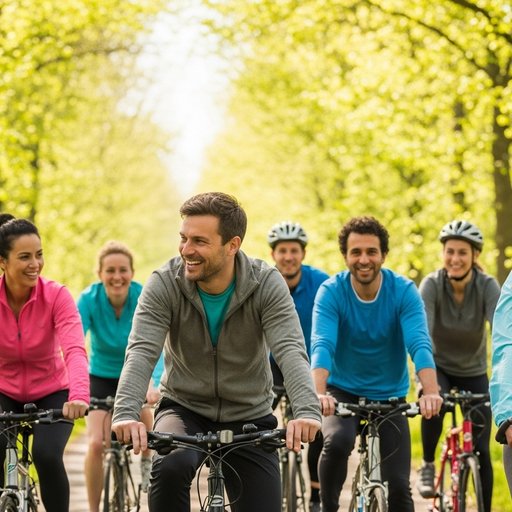
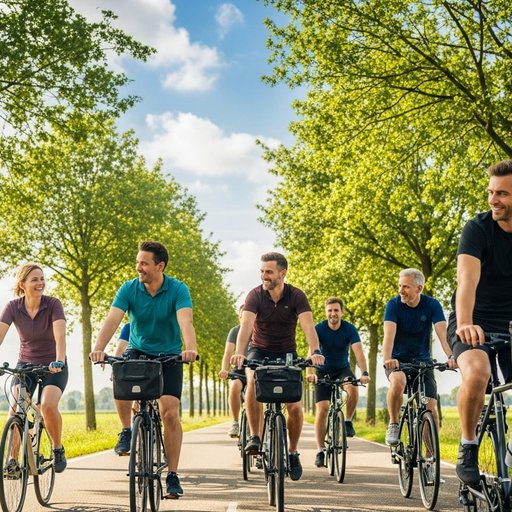
The format is asynchronous by design. An employee in Manila walks before sunrise. A teammate in Toronto runs at lunch. A colleague in London cycles after dinner. Their steps and miles all flow into the same leaderboard. Nobody has to be online at the same time, and nobody has to leave their neighborhood to participate.
Companies like Johnson & Johnson, Intel, General Electric, and General Motors have built parts of their global wellness strategies around exactly this kind of virtual-first thinking. J&J's long-running Live for Life program pioneered company-wide wellness across countries. GM's LifeSteps offers virtual fitness, nutrition, and mindfulness with up to $1,500 in incentives for preventive care. The pattern is clear: when you remove the location requirement, participation becomes possible everywhere.
The financial case stacks up too. Harvard research has long pegged wellness program ROI at up to 6:1, with average savings of about $3.27 per $1 spent. In multinational settings, the cost-per-employee of a virtual challenge is dramatically lower than per-office onsite programming, while reach is dramatically higher.
The Five Big Challenges of Going Global - and How to Solve Each One
Running a challenge across 4 offices is not 4x harder than running it in one. It's about 10x harder, because the friction compounds. Here's what trips up Global HR teams, and what to do about it.
1. Time zones break "live" engagement
If your kickoff webinar is at 10am New York time, that's 4pm London, 11pm Mumbai, and 1:30am Sydney. Don't run a single live launch. Instead, record a 5-minute kickoff video from your CHRO, translate or subtitle it for your top 3-5 languages, and let regional HR partners host short local kickoffs at sensible times. The challenge itself is asynchronous. Treat the launch the same way.
2. Cultural differences in fitness norms
Step counts that feel achievable in walkable European cities can feel impossible in cities built around cars. Cycling is normal in some cultures and rare in others. The fix: make your challenge multi-activity. Count steps, running, cycling, swimming, hiking, even yoga. Convert everything to a common unit (points or kilometers) so a Singapore employee taking yoga classes isn't behind a Berlin employee biking to work.
3. Wearable diversity
You'll have Garmin users, Apple Watch users, Fitbit users, Polar users, and people with nothing but their phone. A platform that supports all major wearables - Garmin, Fitbit, Apple Watch, Polar, Suunto, Withings - is non-negotiable for multinational rollouts. Anyone who has to manually log activity will quietly drop out by week two.
4. Privacy and data regulations
GDPR in Europe, PIPEDA in Canada, LGPD in Brazil, and a patchwork of state laws in the US all govern how health and activity data can be collected. Before you choose a platform, confirm: where is data stored, who has access, can employees opt in voluntarily, and is the company seeing aggregate data only? The legal review takes time. Start it before you start picking themes.
5. Local holidays and quiet seasons
Running a challenge through Ramadan, Diwali, Lunar New Year, Christmas, or Golden Week without thinking about it sends a bad message. Map your top 10 office holidays before locking dates. The strongest months for global challenges tend to be late September through early November, and mid-April through early June. Avoid full-blackout months.
How to Structure a Challenge That Works Across Borders
A global challenge needs more structure than a single-office event, not less. Here's a battle-tested format Global HR teams can adapt.
Length: 4-6 weeks. Shorter than that and people in slow-onboarding regions miss the curve. Longer than that and engagement falls off a cliff in week 7.
Format: Team-based, not individual. Mixed-region teams of 5-8 people. Mixed teams force connection between offices that would otherwise never interact, and they prevent the "Headquarters always wins" dynamic that kills morale.
Goal type: Collective distance goals beat individual leaderboards in multinational contexts. "Walk the perimeter of Earth as a company" or "Cross the Pacific together" is more inclusive than ranking individuals by step count, which tends to advantage employees who don't have caregiving responsibilities or commutes.
Themes that translate well: Virtual journeys along famous routes (the Camino de Santiago, Route 66, the Silk Road, the Great Wall), exploration themes (climb the highest peak on every continent), or seasonal themes (Spring Awakening, Autumn Harvest). Avoid themes tied to a single national culture or holiday.
Activity scoring: Treat steps, running, cycling, and other workouts equally by converting them to common points. A 30-minute swim shouldn't be worth zero just because nobody's wearing a step counter underwater.
Engagement Tactics That Actually Travel
The biggest mistake multinational teams make is borrowing engagement tactics straight from US-only playbooks. What works on a Slack-native US tech company can fall flat in a Tokyo office where Slack is barely used. Here's what travels well across cultures.
Regional team captains. Recruit one captain per major office or region. Their job: nudge their team mid-challenge, share local photos, run small office-specific events (a Friday walk, a bike-to-work day). Captains are the difference between a challenge that lives and one that dies in week two.
Photo and story sharing. Encourage participants to post photos of where they walked or rode. A São Paulo team showing off a coastal walk, a Vancouver team posting from a forest trail, a Berlin team biking through a park. The photos do more for cross-office connection than any kickoff webinar.
Local prizes plus global recognition. Run a regional prize tier (top team in each region wins a local-currency reward or local experience) plus a global recognition tier (the winning global team is featured in an all-hands video). This avoids the awkwardness of giving a $200 Amazon gift card to an employee in a country where it's worth half as much in real terms.
Mid-challenge boosters. Around week 3, when energy dips, drop a small surprise: bonus points for trying a new activity, a "wild card week" where any movement counts double, or a charity match where every kilometer the company walks unlocks a real-world donation. These resets recover engagement that would otherwise quietly leak away.
Measuring Success Without Inventing Metrics That Don't Translate
Global HR leaders need to report results to executives who don't care about step counts. Pick 3-4 metrics that translate into business language.
Participation rate. Percent of eligible employees who registered and logged at least one activity. Anything above 35% is solid. Above 50% in a multinational rollout is excellent.
Retention through the challenge. Percent of registered participants who were still active in the final week. This catches whether you actually engaged people or just got sign-ups.
Cross-office connection. A short post-challenge survey asking, "Did you interact with a colleague from another office during the challenge?" gives you a real number you can take to leadership.
Sentiment and intent. Two questions: "Did this challenge make you feel more connected to the company?" and "Would you participate again?" These are simple, but they map directly to retention and engagement metrics that executives already track.
Skip overly clinical health metrics. You're running an engagement event, not a clinical trial. Save BMI tracking and biometric screenings for a separate, opt-in health program.
How DistantRace Powers Global Virtual Challenges
DistantRace.com is built for exactly this kind of distributed, multi-office, multi-time-zone challenge. The platform supports step challenges, virtual races, cycling challenges, and team-based virtual journeys, with automatic syncing from Garmin, Fitbit, Apple Watch, Polar, Suunto, Withings, Wahoo, MapMyRun, and more. Employees can join from any country, in their own time zone, on their own wearable.
Organizers get a single admin console to set up the challenge, build mixed-region teams, design custom virtual maps, run leaderboards, and issue branded certificates at the end. Late registration via QR codes, multi-language participant flows, and flexible activity scoring make it well-suited for multinational HR teams who need one platform that works everywhere their people work. Explore how to run your next global challenge on distantrace.com.
Putting It All Together
A global virtual challenge for multinational teams isn't just a fitness event. Done right, it's one of the few moments in the year where a finance analyst in Dublin and a sales rep in Singapore are working toward the same goal, sharing photos, and seeing each other as actual humans on the same team. That's worth a lot more than the wellness ROI alone suggests.
The ingredients are simple: asynchronous design, multi-activity scoring, regional captains, mixed-region teams, local-plus-global rewards, and a platform that handles every wearable and every language without manual work. Avoid the time-zone trap, respect local holidays, and pick a goal that everyone can chase together. Run a global virtual challenge for multinational teams the right way once, and your People Ops calendar gets a permanent new fixture - one that pays off in retention, engagement, and a stronger global culture.
Over ons
Hallo! Wij zijn DistantRace. Gedreven door onze passie voor sport streven we ernaar om uitzonderlijke ondersteuning te bieden bij het organiseren van ongeëvenaarde sportevenementen. Wij geloven dat iedereen toegang verdient tot de beste sportervaringen. Schrijf ons en we helpen je dit te realiseren!


TikTok
@distantrace
Inschrijven
Ontvang het laatste nieuws, kortingen en aanbiedingen.