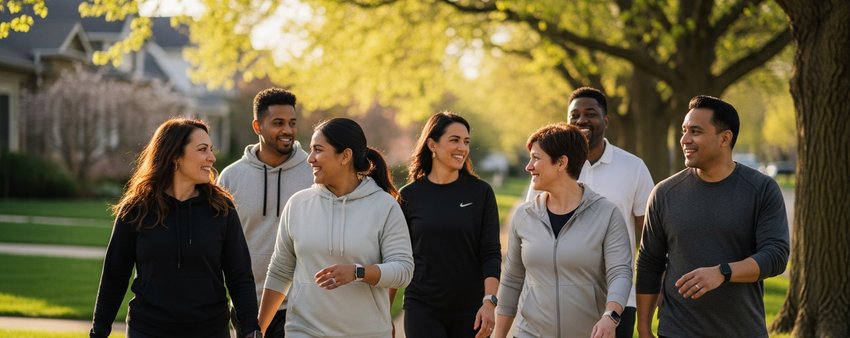
There's something powerful about moving together. When a parent, a sibling, a college friend, or a grandparent commits to the same fitness goal as you - even from hundreds of miles away - workouts stop feeling like a chore and start feeling like a shared ritual. That's the simple magic behind family and friends virtual fitness challenges, and it's why more households are using them to stay connected, healthier, and a little more accountable.
Unlike a corporate wellness program, a family or friend group challenge doesn't need a budget approval or an HR sponsor. All you need is a small group of people who care about each other, a platform to track activity, and a clear goal. The rest takes care of itself.
Why Virtual Challenges Work So Well for Family and Friends
Modern friendships and families are spread out. Adult siblings live in different cities, college friends end up in different time zones, and even close families can go weeks without doing something active together. A virtual challenge fixes that without requiring anyone to move, change schedules, or join a gym.
Three things make these challenges stick:
- Low pressure, high frequency. Logging a 25-minute walk feels easy. Doing it because your dad is also logging his is what makes you actually do it.
- Built-in conversation. Group chats fill up with screenshots, jokes about who skipped a day, and friendly trash talk. The challenge becomes the excuse to talk more.
- A shared finish line. Whether it's a collective 1,000 km or a 30-day streak, finishing something together is what creates the memory.
Choosing the Right Type of Challenge
Not every group needs the same format. Pick a structure that matches the fitness levels and personalities involved.
Step Challenges
The most inclusive option. Steps work for grandparents, kids, and runners alike, and they're counted automatically by phones and smartwatches. Try a "Family Million" - the household collectively walks one million steps in a month. Nobody is too slow, nobody is too fast.
Distance Challenges
Better for groups that already run, cycle, or hike. Set a combined kilometer goal that visually maps to a real route - from your hometown to a meaningful destination, for example. Watching the digital pin move forward each week is surprisingly motivating.
Streak Challenges
Everyone commits to 30 minutes of any activity, every day, for 21 or 30 days. The simplicity is the appeal. The first person who breaks the streak buys the next group dinner.
Head-to-Head Friendly Competitions
For groups that thrive on banter. Two teams - say, "siblings vs. cousins" - compete on total activity points across walking, cycling, and running. Add a small trophy or a homemade certificate for the winning side.
Setting Up Your First Challenge in Under an Hour
You don't need to be technical. The setup is genuinely simple.
- Pick a platform. Use DistantRace.com to create a private virtual challenge for your group. It connects to Garmin, Fitbit, Apple Health, Polar, Suunto, and more, so everyone can keep using whatever device they already own.
- Choose a goal and a window. Two to four weeks is the sweet spot. Long enough to build a habit, short enough to stay exciting.
- Set the rules together. Will you count steps, distance, or active minutes? Will you allow swimming or yoga? Decide in the group chat before you launch.
- Add a small prize. A homemade certificate, the winner picking the next family movie, or a real medal sent in the mail. The prize is symbolic - it's the recognition that matters.
Keeping It Fun, Not Stressful
Family fitness challenges go sideways when one competitive person turns it into a performance review. A few small rules go a long way: celebrate consistency over volume, allow rest days, and never publicly shame anyone for missing a day. Send encouragement when someone logs their first activity in a while - that's the moment that decides whether they keep going.
Also, remember that activity isn't the only point. The group chat, the photos from a trail, the "look at the sunrise on my run" message at 6 a.m. - those are the real outputs. The kilometers are just an excuse.
From One Challenge to a Yearly Tradition
Many groups start with a single 30-day event and end up running a new one every quarter. A spring walking challenge, a summer cycling event, an autumn hiking streak, and a holiday-season step push become a calendar that keeps everyone connected through the year. Some families even make a "championship" with cumulative points across all four seasons.
The point isn't to become athletes. It's to give the people you love an easy, low-friction reason to stay active alongside you - and to create small, regular moments of connection that would otherwise slip past.
Ready to start? Head to DistantRace.com to set up your first private family or friends virtual fitness challenge. In about an hour you can have a group up and running, and within a week you'll wonder why you didn't start sooner.