Virtual Fitness Challenge for Remote Teams: A 2026 People Ops Playbook

Picture this: it's a Tuesday morning, your remote team is scattered across four time zones, and the last all-hands ended with someone admitting they hadn't left the apartment in three days. Sound familiar? Remote work has its perks, but the data is sobering. Distributed employees now average about 9 hours of daily sitting, well above what the WHO and Health Canada recommend for healthy adults. A well-designed virtual fitness challenge for remote teams can shift that pattern in weeks, not months. It doesn't require a gym, a budget shock, or anyone fitting into spandex on camera. It just needs the right format, the right tools, and a launch plan your people actually look forward to.
Why remote and hybrid teams need a different wellness playbook
The wellness perks that worked in the office (subsidized gyms, in-house yoga, Friday smoothies) don't translate to a workforce sitting in home offices, basements, and co-working spaces from Vancouver to Vermont. The World Health Organization and Health Canada both recommend at least 150 minutes of moderate activity each week, roughly 30 minutes a day, five days a week. Remote employees miss that target far more often than their in-office peers, and the cost shows up everywhere: higher stress, lower mood, more sick days, and weaker team cohesion.
What makes virtual fitness challenges different is that they bring movement into the team's social fabric, not just the individual's calendar. Instead of asking each person to figure out their own routine, a challenge gives the whole team a shared goal, a leaderboard, and a reason to message a coworker about something other than the sprint review. That's a cheap way to fight two of remote work's biggest problems at once: physical inactivity and social isolation.
And it scales. A 25-person startup and a 2,500-person enterprise can both run the same challenge format with the same platform. The structure travels.
The numbers that justify the investment
HR leaders rarely get a wellness program approved on vibes alone. Here's the case in plain numbers.
- Gamified wellness challenges have been shown to lift engagement by around 60% compared with non-gamified programs, according to corporate wellness research published over the last two years.
- SAP's Digital Wellbeing program reported a 72% reduction in employee stress after rolling out structured digital wellness initiatives.
- Unilever recorded a 20% increase in employee satisfaction after expanding its wellness offerings to remote and hybrid staff.
- Top programs using leaderboards and team formats reach 80-90% participation rates, far above the 20-40% benchmark of traditional, opt-in wellness programs.
- Harvard research has long pegged employer ROI on wellness programs at up to 6:1, with an average return of about $3.27 for every $1 spent on healthcare savings, plus another $2.73 in reduced absenteeism.
- Workplace inactivity costs U.S. employers an estimated $54 billion per year in lost productivity, on top of $14 billion in injury claims.
You don't need every one of those numbers to land in a budget conversation. You need two or three that match what your CFO already cares about: healthcare costs, retention, or productive hours per FTE.
Six virtual fitness challenge formats that work for distributed teams
Not every challenge format suits every team. Here are six that consistently deliver high participation in remote and hybrid environments.
1. Step challenges with team scoring
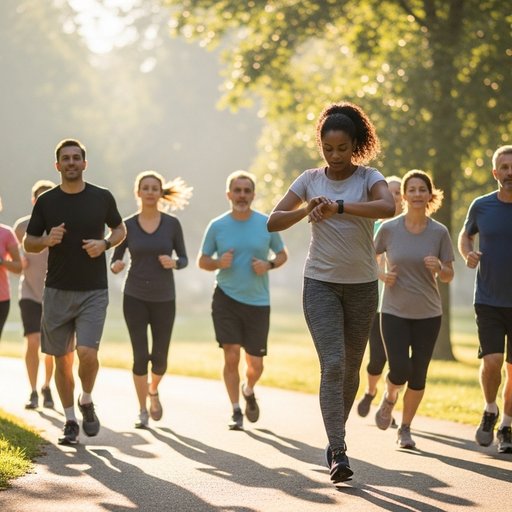
The classic, and still the most accessible. Everyone has a phone or a wearable, so onboarding is near-zero friction. Score teams by daily average steps (not totals) so a five-person team isn't punished for being small. Aim for the 10,000 steps a day target as a stretch goal, but celebrate consistency, not just peak numbers.
2. Virtual journeys
Map the team's combined steps, kilometers, or activity minutes onto a real-world route. A coast-to-coast U.S. journey, say 7,500 km, gives a four-week challenge a story arc. Each Monday update shows the dot moving across a map, which is surprisingly addictive. People who'd never join a "step challenge" will absolutely join "the team is walking from San Diego to New York and we're behind schedule."
3. The 150-minute weekly challenge
Built directly on the WHO guideline. Each participant logs 150 minutes of moderate activity per week, however they want: walking, cycling, swimming, dance class, anything. It's intentionally low-bar, so the conversation centers on consistency, not athletic performance. Great for teams with mixed fitness levels.
4. Inter-department competitions
Engineering vs. Sales. Marketing vs. Customer Success. Pit teams against each other on average minutes, average steps, or completion rate. The trash talk in Slack is half the engagement.
5. Mind and movement challenges
A daily routine of 20 minutes of physical activity, 10 minutes of stretching, and 5 minutes of mindfulness. Used by organizations like CRHA in Canada. Pairs well with stressed-out teams, year-end crunches, or post-launch recovery weeks.
6. Group virtual workout sessions
Live yoga, HIIT, or Zumba over Zoom, scheduled before or after core work hours. Run them as opt-in side events inside a broader challenge so people who hate Zoom workouts can still earn challenge points through walking. Variety prevents fatigue.
Designing for inclusivity across time zones and abilities
The most common reason a remote wellness challenge underperforms isn't the format, it's the design. A challenge built around 6 a.m. group runs is going to leave out parents, people in opposite time zones, employees with disabilities, and anyone with a chronic condition. Inclusivity isn't a nice-to-have here. It's the whole point.
Three rules of thumb:
- Always offer multiple activity types. Steps, cycling minutes, swim laps, wheelchair-pushed distance, and active minutes from any source should all count toward team scoring. Most modern wellness platforms convert these into a common unit so the leaderboard is fair.
- Build for asynchronous participation. No mandatory live events. If someone in Manila wants to do their 30-minute walk at 11 p.m. local, that's the same value as a Toronto-based teammate doing it at lunch.
- Pace, not peaks. A challenge won by the most-already-fit person on the team kills participation by week two. Reward consistency (days active, weeks-in-a-row) at least as much as raw totals.
One more design note: keep the challenge length in the 3-6 week range. Shorter than three weeks and habits don't form. Longer than six and motivation decays. Four weeks is the sweet spot for most teams.
The engagement playbook: from kickoff to finish line
A challenge stands or falls on what happens after launch day. Here's a tactical sequence that consistently lands in the 80%+ participation range.
Two weeks before launch: Email and Slack teaser. Manager talking points. A short video from your CEO or wellness sponsor. Sign-ups should be one click, not a form.
Launch day: Live kickoff call (15 minutes max), team captains introduced, first leaderboard preview, prizes named. Open the leaderboard immediately so day one steps count.
Week 1: Daily Slack/Teams reminders for the first three days. Highlight an underdog team. Send a "you're already at X% of goal" data point.
Week 2 (the danger zone): This is where most challenges lose people. Drop a mid-challenge boost: bonus points for trying a new activity, a surprise prize for the day's biggest mover, or a manager shout-out in the all-hands.
Week 3-4: Tighten the leaderboard storytelling. "Team Alpha caught up by 12,000 steps overnight." Encourage social sharing and short photo posts.
Finale: Live awards moment. Don't skip this. Public recognition is the cheapest, most effective wellness incentive there is. Visible leadership participation across the whole challenge does more for adoption than any prize.
Picking the right platform for a virtual fitness challenge
The platform you pick shapes how your remote team experiences the whole challenge. Look for these essentials:
- Wearable and app sync: Garmin, Fitbit, Apple Watch, Polar, Google Fit, Apple Health, and Health Connect at minimum. The fewer manual entries, the higher the participation.
- Team and individual leaderboards with average-based scoring options.
- Virtual journey or map visualization for storytelling.
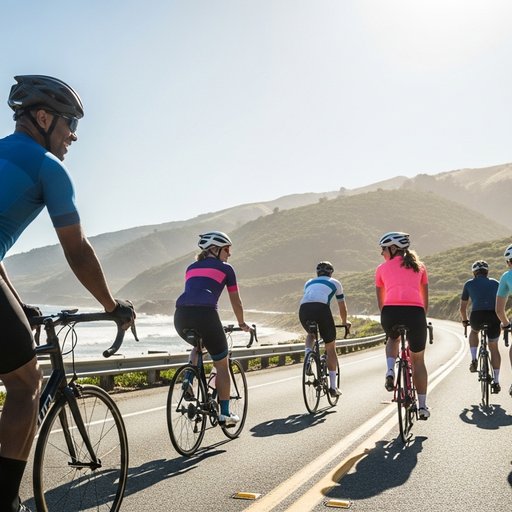
- Multi-activity support (steps, cycling, running, swimming, custom activities).
- Time zone-friendly tracking so a midnight workout in Singapore counts toward the right day.
- Privacy controls that show only what employees choose to share.
Skip platforms that require employees to give up their full health data, that limit you to a single activity type, or that lock you into one wearable brand. Modern remote teams are too diverse for any of that.
Run your next remote-team challenge on DistantRace
DistantRace.com was built for exactly this use case: virtual fitness challenges that work across time zones, devices, and fitness levels. You can run step challenges, virtual journeys, cycling events, or full virtual races without buying anyone a new tracker. It syncs with Garmin, Fitbit, Apple Watch, Polar, Suunto, Google Fit, Apple Health, and more, so onboarding takes minutes. Team leaderboards, average-based scoring, custom maps, certificates, and post-event reports are all included. If you're looking for a remote-friendly platform that doesn't try to be a healthcare app, it's worth a serious look. Spin up a free organizer account and have a challenge live by Friday.
The bottom line
A virtual fitness challenge for remote teams isn't a gimmick or a perks-and-snacks afterthought. It's one of the few interventions that hits physical inactivity, mental health, and remote isolation in the same program, with hard numbers behind it: 60% engagement lifts, 72% stress reductions in the strongest case studies, and Harvard-backed ROI of up to 6:1 on the spend. The format you choose matters less than the design choices around it: inclusivity, async-friendly tracking, four-week pacing, and a real engagement plan from day one. Pick a platform that handles the heavy lifting, and your team can be running its first challenge before the next quarter starts.
Hakkımızda
Merhaba! Biz DistantRace'iz. Spor tutkumuzla beslenerek, benzersiz spor etkinlikleri düzenlemede olağanüstü destek sağlamaya çalışıyoruz. Herkesin en iyi spor deneyimlerine erişimi hak ettiğine inanıyoruz. Kendi spor etkinliklerinizi bizde düzenleme fırsatı sunuyoruz. Bize yazın, ve bunu başarmanıza yardımcı olalım!


TikTok
@distantrace
Abone Ol
En son haberleri, indirimleri ve teklifleri alın.