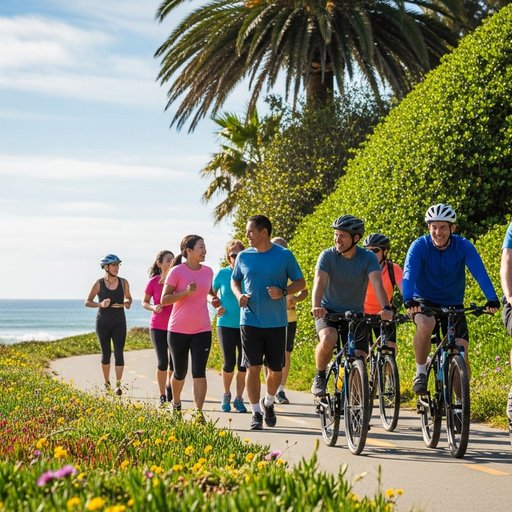
Here's a stat that should make every HR leader pause: a recent meta-analysis found that regular walking groups lowered participants' systolic blood pressure by 3.72 mm Hg and cut depression scores meaningfully, all with no notable side effects. That's a clinical-grade result from something as simple as a few coworkers walking together at lunch. If you want to know how to start a walking group at work that people actually show up for, the good news is you don't need a big budget or a gym. You need a clear goal, a handful of committed people, and a schedule that respects the workday. This guide walks you through it step by step.
Why a walking group beats most wellness perks
Most wellness budgets get spent on things employees barely touch. A walking group is different because it's free, social, and easy to join. And the health evidence is hard to argue with.
That same meta-analysis tracked a range of measurable improvements among people who walked in groups: diastolic blood pressure dropped by 3.14 mm Hg, resting heart rate fell by 2.88 bpm, and VO2 max (a core fitness marker) rose by 2.66 mL/kg/min. Participants also saw better body composition, lower BMI, and longer six-minute walk distances. These aren't soft, feel-good numbers. They're the kind of metrics that show up in lower healthcare claims over time.
The mental health angle matters just as much. Office jobs are sedentary by design, and prolonged sitting is now a recognized risk factor for everything from cardiovascular disease to low mood. Walking breaks up that sitting time and adds a dose of daylight and conversation. The CDC notes that physical-activity programs at work can boost productivity, cut absenteeism, lift morale, and help companies attract and keep good people. A walking group delivers all of that for the price of a sign-up sheet.
The social glue most programs miss
There's one benefit you can't put in a spreadsheet: connection. Group walking creates camaraderie, accountability, and cross-team interaction. People from different departments end up chatting about something other than deadlines. For hybrid and remote teams especially, an in-person or virtually synced walk becomes a rare moment of genuine contact. That's the quiet reason walking groups stick when other initiatives fizzle.
Step 1: Define a goal anyone can join
Before you send a single invite, decide what the group is for. Is it general wellness? Stress relief? More daily movement? Team bonding? A friendly step competition? You don't need a grand mission. You just need clarity.
The key rule: keep the goal simple enough that employees of every fitness level can take part. If your aim sounds intimidating, you'll scare off the exact people who'd benefit most. "Let's walk 20 minutes together on Tuesdays and Thursdays" works far better than "Let's train for a marathon." You can always add ambition later. Start with a door wide enough for everyone to walk through.
Step 2: Recruit a small core team first
Don't try to launch with the whole company. Start with three to five interested people who'll help get things off the ground and bring energy to the first few walks. This small core does the heavy lifting of early momentum.
Then use personal outreach. Ask each core member to invite two or three coworkers directly. A personal "Hey, come walk with us Thursday" converts far better than a mass email. Back that up with the usual channels: a note in the HR newsletter, a flyer in the break room, a Slack or Teams message, and a quick nod of support from a manager or two. People join things their colleagues invite them to.
Step 3: Hold a short kickoff and lock the logistics
Bring the interested folks together for a 15-minute kickoff, in person or on a call. The point is to agree on the basics so nobody's confused later. Decide together:
- How often you'll walk (once or twice a week is a realistic floor)
- Which days and times fit around recurring meetings
- Where you'll meet and which route you'll take
- How long or far each walk runs
- What happens in bad weather (more on that below)
- Whether people give a heads-up if they can't make it
Getting these decisions made as a group, rather than dictated from the top, gives everyone a sense of ownership from day one.
Step 4: Pick a time that fits real work life
Scheduling is where most walking groups live or die. Choose a slot that's usually free of recurring meetings, like lunch, a mid-morning break, or an afternoon reset. Lunchtime is the classic choice for a reason: people are already stepping away from their desks.
Aim for once or twice a week to start, and treat two to three days a week as a strong target once the habit sticks. Begin and end on time so the group respects everyone's break and nobody feels they're falling behind on work. Short and dependable beats long and sporadic every single time. A reliable 20-minute walk people can count on will outlast an ambitious hour-long trek that keeps getting skipped.
Step 5: Make the route easy, safe, and weatherproof
Choose a route with sidewalks, decent lighting, and a manageable distance. Then actually test it at the time of day you plan to walk, because a path that's pleasant at 8 a.m. might be packed or sun-baked at noon.
Crucially, plan for weather. Identify both an outdoor route and an indoor backup, like a hallway loop, a few flights of stairs, or a nearby mall. Groups that stop walking the first rainy week rarely restart. When people know there's always a plan B, attendance stays steady through the seasons. Keep the default distance modest so newcomers aren't intimidated, and let faster walkers do an extra loop if they want more.
Step 6: Keep the barrier to entry near zero
The fastest way to kill participation is to make walking feel like a commitment people can fail at. So design for flexibility. Encourage everyone to move at their own pace, which lets different fitness levels walk side by side without anyone feeling slow or rushed. Let people drop in even when they can't make every session. And keep sessions short enough that joining never feels like a sacrifice.
Remember: a 15-minute walk that 20 people join beats a 45-minute walk that only two can fit in. Lower the bar, and more people clear it.
Step 7: Communicate, motivate, and track
Consistent communication is the engine that keeps the group running. Send a reminder before each walk through email or a group chat, with the time, meeting spot, and route. Keep visible nudges around too, like a calendar invite or a sign by the door.
Then layer in motivation. Give the group a name or a slogan so it feels like a thing people belong to. Recognize milestones and attendance streaks with small shout-outs. Rotate who leads the walk so ownership spreads. And mix in the occasional themed walk, charity walk, or destination route to keep things fresh.
Finally, track lightly. A simple attendance list or a shared step tracker tells you what's working and gives the group something to rally around. Ask for feedback every few weeks and adjust the schedule, route, or format as you learn. The groups that last are the ones that evolve.
Make it bigger with a platform built for it
A lunchtime walking group is a perfect start, and at some point you'll want to add a little friendly competition or connect your in-office and remote teams around a shared goal. That's where DistantRace helps. You can spin up a step challenge or virtual walking journey, let everyone sync steps from Garmin, Fitbit, Apple Watch, or Polar, and watch progress climb a shared leaderboard or a map-based route. It turns your small walking crew into a company-wide event without losing the casual, anyone-can-join feel that made it work. Themed challenges, team formations, and milestone rewards are built right in, so you spend your time encouraging people instead of wrangling spreadsheets.
Start small, start this week
You now know how to start a walking group at work, and the honest truth is the hardest part is just picking a day and showing up. Define a simple, inclusive goal. Recruit a few committed walkers. Lock in a time that fits the workday, choose a safe route with a weather backup, and keep the barrier to joining as low as you can. Communicate often, celebrate small wins, and let the group shape itself over time. The blood pressure, the mood lift, the cross-team friendships all follow from that first 20-minute loop. So put it on the calendar, send the invite, and take the first step this week.