Gamification in Employee Wellness Programs: Why Points, Badges and Leaderboards Triple Participation
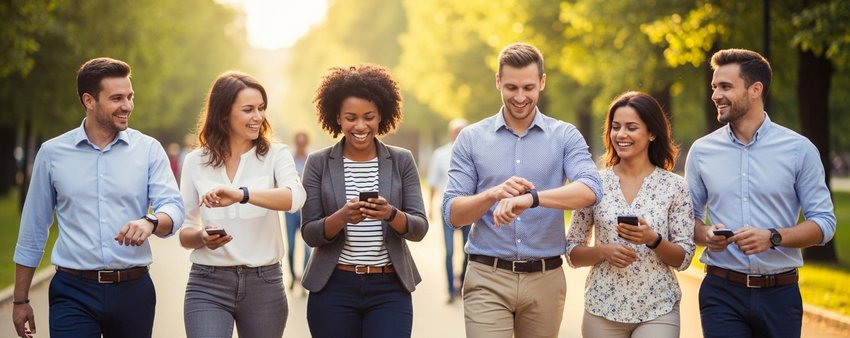
Only 21% of employees reported being actively engaged at work in 2024, according to Gallup data analyzed by CoreHealth Technologies. That's a sobering statistic for any HR leader who has watched a carefully planned wellness program fizzle out after the first two weeks. But there's a pattern in the research that keeps showing up: when companies add gamification to their employee wellness program, participation rates triple. Traditional wellness initiatives hover around 20-40% uptake. Gamified programs hit 73% participation. The difference isn't motivational posters or another lunch-and-learn. It's the psychology of points, badges, leaderboards, and friendly team competition - the same mechanics that keep people glued to fitness apps and online games. Here's what the latest research says about why a gamification employee wellness program works, and how to design one that actually keeps people moving past day three.
What gamification actually means in a wellness context
Gamification isn't turning your wellness program into a video game. It's borrowing specific behavioral mechanics from games and applying them to health behaviors you want employees to repeat. The core building blocks are simple: points for completed activities, badges for milestones reached, leaderboards that visualize progress, team competitions that pool effort, and virtual maps or journeys that turn abstract step counts into a sense of forward motion.
The reason these mechanics work isn't mysterious. They tap into what behavioral scientists call competence (the satisfaction of getting better at something), autonomy (you choose how to play), and relatedness (you're doing it with other people). A 2-year prospective cohort study of 775 employees at a Canadian national company, published in the American Journal of Health Promotion, found that gamified web-based wellness programs produced sustained behavior change: a 264 Metabolic Equivalents increase in weekly physical activity, a 17% drop in perceived stress, a 16% drop in insomnia severity, and a 10% reduction in general fatigue.
What this means in practice is that gamification isn't a marketing wrapper. It's the engagement engine. Strip it out and most wellness programs collapse back to the same 20-40% participation ceiling.
The participation numbers that justify the investment
Let's get specific about what gamified programs deliver, because the case for HR is built on numbers, not vibes.
A 2025 fitness challenges report from Rise Global pulled together data from corporate wellness programs running leaderboards and badges. The results were dramatic. Exercise frequency rose 48% when leaderboards were introduced. Sustained engagement lasted 3x longer compared to solo tracking. Challenge completion rates jumped to 89% for programs with leaderboards, versus just 23% without them. And in one corporate case study, participation rose from 12% to 78% after the company added competitive elements.
Compare that to baseline wellness program data. Research from Dominican University, frequently cited in 2025 industry reports, shows that publicly sharing a goal raises achievement rates to 65%. Add a competitive leaderboard on top, and that number climbs to 95%. The reason is straightforward: humans are wired to care about social comparison. When 71% of participants in fitness challenges say they exercised harder specifically because of competition, that's not vanity - that's a behavioral lever HR leaders can pull.
Here's the practical implication. A 200-person company running a traditional wellness program might get 60 people to engage. The same company running a gamified step challenge could see 150 employees actively participating, with the majority completing the full challenge. That's not a small efficiency gain. It's a different program entirely.
Why leaderboards work (and how to keep them from backfiring)
Leaderboards are the most polarizing element of gamification. Done right, they're rocket fuel. Done wrong, they alienate the half of your workforce that isn't naturally competitive.
A 2022 study published in PMC (PMC8916940) tested badges and leaderboards across two experiments and found something useful for program designers. Combined badges plus leaderboards produced the cleanest result: 67.7% of participants in the combined condition reported no negative effects from social comparison, compared to just 13.3% in the control. Leaderboards alone showed mild downsides (only 43.8% unaffected), but pairing them with badges softened the competitive edge significantly.
Design principles that protect non-competitive employees
The fix is in how you structure the leaderboard, not whether to use one. A few rules that show up consistently in the 2024-2025 research:
- Reset weekly or monthly so top performers don't dominate the entire challenge and discourage everyone else.
- Filter by team or department so a person isn't comparing themselves against a marathon runner three departments away.
- Add team challenges where individual contributions pool together. This pulls in employees who'd never compete solo but happily contribute to a group goal.
- Use badges as a parallel track so participants who'll never crack the top 10 still get visible recognition for hitting personal milestones.
- Offer solo options for the personalities that find any public comparison stressful.
The goal is to give people multiple ways to win. A solo participant should feel rewarded for hitting their own milestone. A competitive runner should feel rewarded for topping the leaderboard. Both can coexist in the same program if you design for both.
The badge effect: small symbols, big behavior change
Badges look trivial. They're digital icons on a screen. Yet the research keeps showing they punch above their weight. The reason is that badges convert effort into a visible artifact, and visible artifacts trigger the same satisfaction loops that drive social media engagement.
In platforms like ChallengeRunner, predefined badge milestones (hit 100,000 points, complete a virtual city loop, walk every weekday for a month) give participants intermediate goals between starting and finishing a challenge. That matters because most people drop off in the middle. A four-week step challenge without checkpoints is just a long slog. The same challenge with weekly badges, themed achievements, and visible progress on a virtual map keeps people coming back.
And badges scale where leaderboards don't. A 500-person company can hand out thousands of unique badges across the year without anyone feeling shortchanged. Try that with a single leaderboard and you've got 495 people who feel like losers.
The ROI case for finance: $7 returned for every $1 invested
If you're pitching this to a CFO, the numbers get even sharper. Industry data compiled by Giveriver in 2024 puts the healthcare savings ratio at $7 returned for every $1 invested in gamified wellness programs. That's at the upper end of published ROI ranges - Harvard's frequently-cited meta-analysis lands closer to 3:1 - but it reflects the participation multiplier. When 73% of your workforce engages instead of 25%, the savings math changes.
Other financial signals worth bringing to a budget conversation:
- 31% reduction in sick days tied to leaderboard-driven walking programs, saving one organization $3.2 million annually (Rise Global, 2025).
- 1.2-point average BMI drop and an 18% reduction in obesity-related hospital admissions after a year of gamified corporate wellness (Rise Global, 2025).
- Engaged employees are 69% less likely to be job-hunting (Gallup via BambooHR), which connects gamified wellness to retention costs.
- 35% of voluntary exits are linked to mental health factors, which gamified programs help address through stress reduction and team connection.
Workplace inactivity costs US employers an estimated $54 billion a year in lost productivity. Even capturing a small fraction of that through a high-participation wellness program is the kind of math that lands in a board meeting.
What the best gamification employee wellness program actually looks like
Pulling the research together, here's what the highest-performing programs share. They run on platforms that handle automatic step tracking, sync with the wearables employees already own (Garmin, Fitbit, Apple Watch, Polar), and visualize progress on virtual maps that turn step totals into journeys across cities, countries, or continents.
They mix individual leaderboards with team-based competitions, so introverts and extroverts both find a comfortable lane. They use badges to celebrate milestones that aren't ranked - first 50,000 steps, a full week of walking meetings, completing a virtual hike. They reset their leaderboards weekly to keep the field competitive. And they include short-form challenges (15-minute lunch walks, walk-and-talks, themed weeks) alongside longer arcs, because the 2024 research is clear that even brief gamified bursts move the engagement needle.
The platforms that handle this well also automate the boring parts: registration, syncing, leaderboard updates, prize logistics, communication cadence. HR shouldn't be the engagement engine. The system should be.
How DistantRace makes gamified wellness practical
This is where DistantRace fits the picture for HR teams that want gamification without the heavy admin. The platform runs step challenges, virtual races, and team-based fitness competitions with built-in leaderboards, badges, virtual maps, and automatic syncing from Garmin, Fitbit, Apple Watch, Polar, Suunto, and other major wearables. Teams can run a month-long step challenge across a global workforce, a one-day virtual 5K for a single office, or a year-long ongoing leaderboard - the same platform handles all three. Pricing scales with your headcount rather than locking small teams out, and the setup takes hours rather than weeks. If you're designing your first gamified wellness program or replacing a tired one, it's worth a look.
Where to start if you're new to gamified wellness
You don't need a six-month rollout plan. The companies that get this right tend to start with one well-designed challenge and build from there.
Pick a clear, time-boxed goal (a four-week team step challenge is the most reliable starting point). Use a platform that handles the gamification mechanics automatically so you're not maintaining spreadsheets. Communicate it twice before launch and twice during. Build in a mid-challenge boost - a themed week, a guest speaker, a small prize tier - to fight the engagement dip that hits around day 10. Celebrate completion with both leaderboard winners and badge earners, so multiple personality types feel recognized. Then survey participants and run the next one smarter.
Most wellness programs fail not because the idea is wrong but because the design ignores how humans actually behave. Gamification fixes that. It turns abstract wellness goals into specific actions with visible feedback, social context, and small wins along the way. When 73% of your workforce shows up instead of 25%, you've changed what your wellness program can do. A well-designed gamification employee wellness program isn't a perk. It's the difference between a program that works and one that gets quietly cancelled at the next budget review.
Sobre Nosotros
¡Saludos! Somos DistantRace. Impulsados por nuestra pasión por el deporte, nos esforzamos por ofrecer un apoyo excepcional en la organización de eventos deportivos incomparables. Creemos que todos merecen acceso a las mejores experiencias deportivas. Nos encanta el deporte y brindamos la oportunidad de organizar tus propios eventos con nosotros. Escríbenos y te ayudaremos a lograrlo.


TikTok
@distantrace
Suscribirse
Recibe las últimas noticias, descuentos y ofertas.