Quote
Physical fitness is not only one of the most important keys to a healthy body; it is the basis of dynamic and creative intellectual activity.
- John F. Kennedy

Here's a scenario that plays out in HR offices every year. You launch a workplace step challenge, set the goal at 10,000 steps a day, and watch the sign-ups roll in. Three weeks later, half your participants have quietly dropped off. The same two marathon runners are dominating the leaderboard, your warehouse team feels cheated because they're already on their feet all day, and someone in accounting is convinced a colleague strapped their tracker to a dog. Most of these problems trace back to one thing: the step challenge rules. Clear, fair rules are the difference between a challenge that builds momentum and one that fizzles by week two. And the data backs this up. A recent 2026 corporate program logged nearly 1.6 billion steps across 96 organizations and 6,806 participants, proof that when the structure is right, people stay in.

Here's a number that should make every HR leader pause. Employees who walk at least 20 minutes a day, five days a week, take 43% fewer sick days than colleagues who exercise once a week or less.

Here's a number that should give every HR leader pause. In Mind Share Partners' 2025 mental health report, 50% of U.
Discover the step-by-step process of setting up a new step challenge using DistantRace. Embark on this exciting journey with us.
- John F. Kennedy
Here's a number that should worry any HR team planning a wellness program: roughly 60% of workplace challenges lose momentum within the first two weeks.

Here's a stat that should make every HR leader pause: a recent meta-analysis found that regular walking groups lowered participants' systolic blood pressure by 3.
The Conqueror Challenges built a loyal following by mailing real medals for virtual journeys along famous routes, and the app reviews show it.

Step challenges are equal parts fitness and friendly rivalry. Whether you are competing against colleagues, friends, or yourself, climbing to the top of the leaderboard takes more than just good intentions.
Johnson & Johnson spent roughly a decade building one of the most studied wellness programs on the planet.

Most wellness programs don't fail because the ideas are bad. They fail because they're random. A step challenge in March, a lunch-and-learn in July, then six quiet months while everyone forgets the program exists.
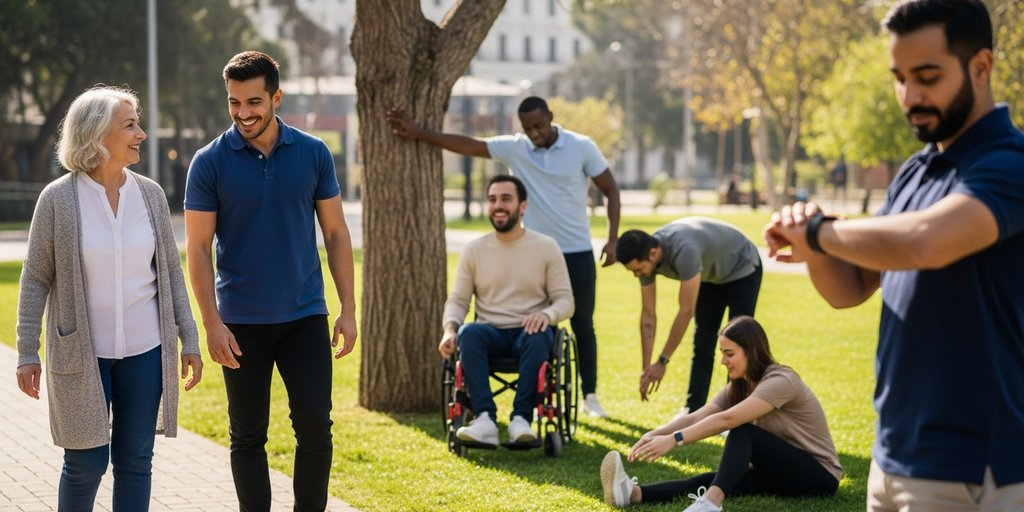
Here's a number that should stop every HR leader in their tracks. According to the Disability Equality Index, 28% of employees with disabilities say their employer offers no wellness program at all, compared with 21% of employees without disabilities. That gap is the quiet problem behind a lot of well-meaning wellness initiatives: the people who could benefit most are often the ones left on the sidelines. If you're hunting for inclusive wellness challenge ideas that actually pull in your whole team - not just the marathoners and the gym regulars - you're asking the right question. The best challenges in 2026 aren't about who can do the most. They're about giving everyone a real way in..
Greetings! We are DistantRace. Fueled by our passion for sports, we strive to provide exceptional support in organizing unparalleled sports events. We believe that everyone deserves access to the finest sporting experiences.