Quote
Physical fitness is not only one of the most important keys to a healthy body; it is the basis of dynamic and creative intellectual activity.
- John F. Kennedy
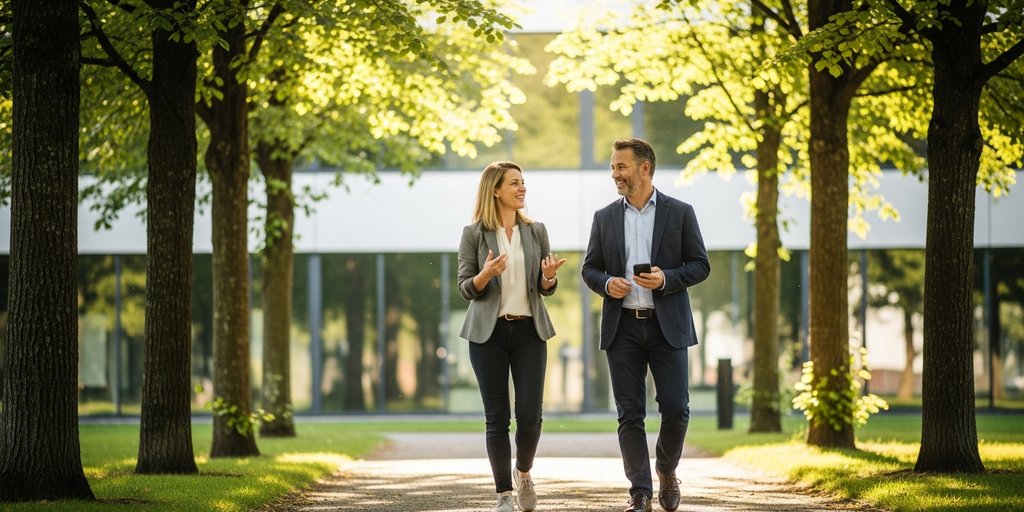
Picture this scenario: two of your senior product managers spend 45 minutes locked in a windowless conference room debating a roadmap. They leave irritated, foggy, and no closer to a decision. Now picture the same two people walking a quiet path in the park near your office for the same 45 minutes. Same topic, same goal, but a very different outcome. That's not just a feel-good story. A growing body of research, including a foundational Stanford University study, shows that walking meeting benefits include a creativity boost of roughly 60% compared to sitting. For HR leaders, wellness coordinators, and managers in the US and Canada, this is one of the cheapest, lowest-friction wellness wins available in 2026.

Here's a number that should worry every People Ops leader: only 31% of hybrid workers and just 23% of fully remote workers say they feel engaged at work, according to recent workforce research.

Here's a number that should land hard for any small business owner: the RAND Corporation's 2025 Workplace Wellness Review found that small firms running low-cost wellness programs see $1.
Discover the step-by-step process of setting up a new step challenge using DistantRace. Embark on this exciting journey with us.
- John F. Kennedy

Only 21% of employees reported being actively engaged at work in 2024, according to Gallup data analyzed by CoreHealth Technologies.

Most small business owners assume a real employee wellness challenge means hiring a vendor, buying wearables for everyone, and writing a five-figure check.

Forty-seven percent of employees say they feel stressed most days at work. That's nearly half your workforce running on fumes before lunch.
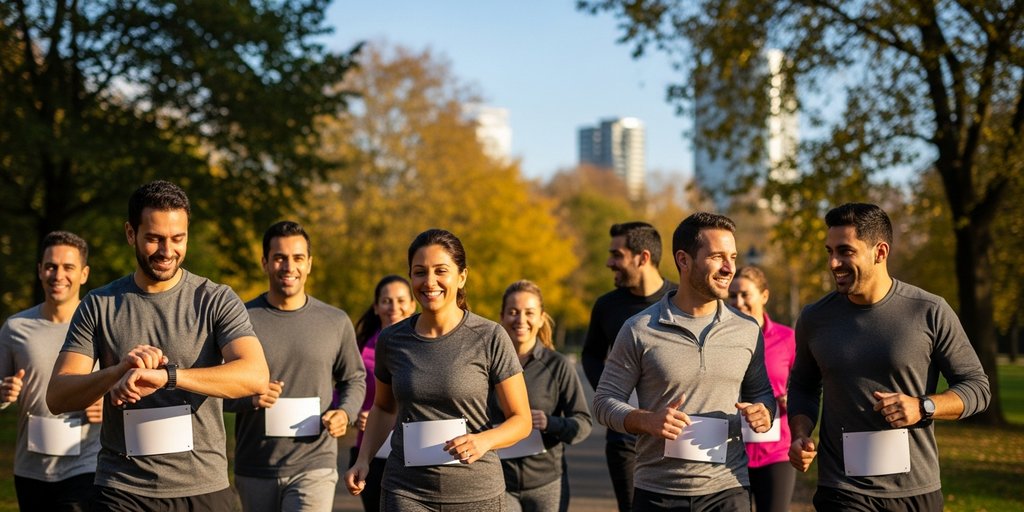
Picture this: it's a Saturday morning, and 240 employees from 14 different cities are running a 5K at the same time.

Picture this: a Tuesday morning, your office Slack channel lighting up with screenshots of step counts, a marketing manager in Toronto trash-talking the engineering team in Austin, and someone from finance who hasn't taken a real lunch break in months suddenly walking around the block at noon. That's what a well-run corporate walking challenge does. And it's not just a feel-good story. According to a University of Edinburgh study of the Step Count Challenge, 93% of participants reported better physical health after taking part, and structured workplace step programs have shown sustained engagement rates as high as 94.4%. For HR teams trying to move the needle on wellness without blowing the budget, walking challenges keep showing up as the rare program that actually works..
Picture this: it's a Tuesday morning, your remote team is scattered across four time zones, and the last all-hands ended with someone admitting they hadn't left the apartment in three days.
You can't run a payroll process that ignores half your offices. So why do so many wellness programs still leave international teams behind.
Greetings! We are DistantRace. Fueled by our passion for sports, we strive to provide exceptional support in organizing unparalleled sports events. We believe that everyone deserves access to the finest sporting experiences.